
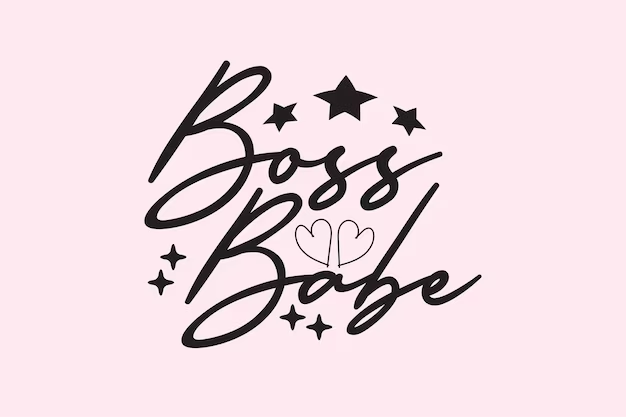

For about five years, there was a dominant visual language for women in business. Pink. Gold. Cursive script. Inspirational quotes overlaid on photos of women holding lattes. The phrase “boss babe” or “girl boss” or “lady boss” rendered in calligraphy. Pink dollar signs. Affirmations about manifesting wealth. Conferences with names like “She Means Business” or “Powerhouse” or “Bawse.”
That aesthetic is dead.
Not gone — it still exists in certain corners of LinkedIn and Instagram, mostly trailing behind multi-level marketing companies and self-help coaches. But culturally, it has lost its grip. The serious women in business — the ones running real companies, the ones being profiled in major publications, the ones with billion-dollar exits — are not posting about manifesting their abundance.
What replaced it is harder to define because it’s deliberately understated. Black or neutral palettes. Serif fonts. Minimal language. The aesthetic of a major newspaper or a private bank, not a self-help workbook. The visual vocabulary of legacy power instead of nouveau hustle.
This shift wasn’t an accident. It was a response to the cumulative damage done by the pink-and-gold era. That era told women that being in business meant performing femininity in a specific, marketable way. It conflated entrepreneurship with self-marketing, success with influence, and capital with vibes.
The women who built actual businesses during this era often kept their distance from the aesthetic. They didn’t post about manifesting. They didn’t attend the conferences. They wore black blazers and answered questions in plain sentences. When their companies grew, they hired actual operators and accountants, not “energy coaches.”
What killed the boss babe aesthetic was the gap between its promise and its results. It promised women that visibility, branding, and confidence were enough. They weren’t. The women who actually built things had to learn the same boring fundamentals — pricing, hiring, cash flow, distribution — that have always been required to run a company. The aesthetic was a shortcut that didn’t lead anywhere.
What’s emerging now is a more sober vision of women in business. Less performative, less aestheticized, less branded around being a woman. More boring, more rigorous, and ultimately more durable.
The takeaway
The brands and personas that succeed long-term are usually the ones that don’t lean too hard on aesthetics. If you’re spending more time on your visual identity than your unit economics, you’re building the wrong thing.